Previously in my blog, my discussion toward narrative in gaming been directed towards video games, but this week, I want to explore the direction of narrative in board games. In my experience, the narrative function in board games can be similar to the narrative function in video games. Not too long ago, I played the board game Munchkin for the first time, which if you haven't played it, is a card-based board game where the players create a character and fight monsters in a cute parody of RPG/ traditional dungeon and dragon-esque games. But I think what makes the game so interesting is that it allows the players to come up with their own narrative based on the random character that is created. The cards are a variety of different values, anywhere from equipment and armor to steeds and power-ups, all help form the character that you have throughout the game.
This form of gameplay allows the players to create their characters own stories, it allows for emergent behavior in the game, and fosters interplay between each player.
Traditionally, there has been a narrative arc in which board games were based upon, and though they were loose arcs with room for change and exceptions, most of the games that we are used to playing are usually based around these arcs.
A game design mechanics blogger, Linnaeus illustrates the game arcs in 2 different functions,
- The opening, middle game. and end game
- Income, Engine Building, Conversion
He explains the first function as:
-opening : "activation and coordination" of pieces and forming of a gameplan
- middle game: active combat or "the main struggle" as Linnaeus says
- end game: game slows, final maneuvers that determine the winner
Linnaeus gives some examples of this game style, but I think one of the best examples he gives is chess.
1) Setup of pieces, forming of strategy (Opening)
2) The gameplay, moving pieces, capturing pieces (middle game)
3) Most pieces are out of commission, winding down to the last available moves ( end game)
And the second as:
Income : beginning resources and start up
Engine Building : Using income to build "victory points"
Conversion: Rapid accumulation of "victory points"
I think, the most familiar game we can associate this arc with is Monopoly
Income: Go space, first cash payout ( income)
Engine Building: Buying properties, earning rent, building houses and hotels (engine building)
Conversion: Buying the most properties, rent accumulation due to multiple rent incomes, hotels and bankruptcy of other players
Though he doesn't that these arcs are a bad thing, he frames them as a generic layout that many other games are made of, where the structure there, and a slightly different narrative laid on top. The end result is always the same and the gameplay to the end is always similar ( as in Monopoly : The player with the most properties/ money wins, doesn't matter the player)
This presents another interesting depth to narrative in games. The more that the players can create their own narrative within the framework correlates to a more desirable game experience.
Showing posts with label Game Design. Show all posts
Showing posts with label Game Design. Show all posts
10.14.2013

10.07.2013
The Need for Complex Narrative is Growing
Last week in my blog, I discussed the evolution of narrative through gameplay, as in games that let the player discover or create their own story are starting to become the next part in video game evolution. This week I found an article written by gamer-journalist Daniel Clark, who discusses how his need for a complex narrative in a game is starting to trump other facets of gameplay and how this need is starting to become a universal need for many gamers.
Clark notes that the more freedom and the more realistic the outcomes can be such as decisions that are made have consequences, and actions are based in a cause and effect manner. He notes that there is a distinctive change in the styling of narratives in games, "in game design, has seen a distinct shift away from a purely active response (e.g. kill everyone in the room), to more complex webs of cause and effect. Players are given far more choice in what type of order is restored (e.g. selfish gain versus community well-being), and by what means these conditions are met (e.g. through might or diplomacy)."
Just like all facets of technology, our expectations for games are growing, and with that is the expectation that the line that we put between games and reality is starting to blur. The more that games can mimic and become like real-life, the more we are interested and engaged in them. At the beginning of this blog series, I asked why narrative was important to the function and success of games, and Clark answers that by saying that narrative adds a break in between modes of mechanical gameplay, and allows a game to not seems to repetitive, boring, or intense. But he also says that narrative is also more than that, "The rise of narrative in gaming has been exactly that – stories created under the auspices of game design, like any other component, tailored to the experience intended." I think it is interesting to note that it seems that narrative is an integral part of experience.
Clark ends by saying "The fact is, our lives are intricate portraits of human desire; its satisfactions and frustrations, both negligible and immense. When games mimic the agonies and ecstasies of our time on this planet, the depth of experience equals those inspired by any art form." I think that this is definitely true. There is a rise in popularity of games that allow more free-roam, more human-like interaction within a fantastical or unable to be experience setting? Call of Duty or Elder Scrolls, they appeal to us because we have experiences that would in no other way be possible.
Clark notes that the more freedom and the more realistic the outcomes can be such as decisions that are made have consequences, and actions are based in a cause and effect manner. He notes that there is a distinctive change in the styling of narratives in games, "in game design, has seen a distinct shift away from a purely active response (e.g. kill everyone in the room), to more complex webs of cause and effect. Players are given far more choice in what type of order is restored (e.g. selfish gain versus community well-being), and by what means these conditions are met (e.g. through might or diplomacy)."
Just like all facets of technology, our expectations for games are growing, and with that is the expectation that the line that we put between games and reality is starting to blur. The more that games can mimic and become like real-life, the more we are interested and engaged in them. At the beginning of this blog series, I asked why narrative was important to the function and success of games, and Clark answers that by saying that narrative adds a break in between modes of mechanical gameplay, and allows a game to not seems to repetitive, boring, or intense. But he also says that narrative is also more than that, "The rise of narrative in gaming has been exactly that – stories created under the auspices of game design, like any other component, tailored to the experience intended." I think it is interesting to note that it seems that narrative is an integral part of experience.
Clark ends by saying "The fact is, our lives are intricate portraits of human desire; its satisfactions and frustrations, both negligible and immense. When games mimic the agonies and ecstasies of our time on this planet, the depth of experience equals those inspired by any art form." I think that this is definitely true. There is a rise in popularity of games that allow more free-roam, more human-like interaction within a fantastical or unable to be experience setting? Call of Duty or Elder Scrolls, they appeal to us because we have experiences that would in no other way be possible.
9.30.2013
Interactivity Evolving: Narrative Structure in "Heavy Rain"
In my last blog, I discussed how the mechanics of a game helped create the narrative of the game, such as Limbo, this time I am discussing a game that has a very strong, almost cinematic narrative, Heavy Rain and how in both games, there is a trend emerging in the narrative style of video games. Narrative evolving through interactivity.
I came across an article in my research, an article from Gamasutra about the game's creator, David Cage. Cage describes how Heavy Rain's narrative structure sets it apart from other games, " I want to make games for a mature audience, and I think you need to go for stories, characters, and emotion.There are so many games out there where you shoot, or you run, or you jump. The industry doesn't need one more. So, yeah, try to create something emotional." Cage seems to imply that that emotion is another narrative element that draws people into the game. "I think what really matters is to create characters that the audience can resonate with. As long as you have characters that you like, and when you feel they are part of yourself in there, you get interested in what is happening to them, and then it resonates with you. That's the most important thing. And you don't need to shoot or kill anyone. There are other ways of interacting that are just as interesting." This definitely holds true in the structure for Heavy Rain, at the very beginning of the game, you play as the main character and you learn him. You get to know his emotions, his daily routine, the people that are most important to him in his life. You get to actually play his life, and you actually in a way become Ethan Mars ( the main character) through the gameplay, with immediate environmental feedback of his activities and his day-to-day interactions. Your actions and decisions as the player matter! It inspires how the narrative evolves throughout the story. Different actions can lead to different consequences.
In this game, characterization becomes key to caring about the narrative, we are intrigued not because the game has us performing exciting actions or taking us to exotic locations or situations, but because we care about the story and we want to know what happens next. "My approach is sometimes not well understood: I am interested in creating emotions through interactivity. I chose to use storytelling because I love stories and I think it is a very powerful and universal way to create emotion, " says Cage. He also talks about the concept that the strongest narrative is that which the player can discover and learn for himself. Narrative then becomes so intuitive, so woven into the game that it engages on so many different levels. "How can we enable the player himself to tell the story he wants through his actions, rather than forcing him to watch cinematics? Defining a language to tell compelling interactive stories without using repetitive mechanics is really the goal of my work, " Cage says. And it really makes me think about the experience that I want to have with this medium. From Cage's point of view, it seems that stories, good stories, beg for an audience that can get immersed in them. We want to have a shared experience with the characters, or even give ourselves a presence with in the story. All these things, I think Cage would argue add meaning and depth to the video game world.
I came across an article in my research, an article from Gamasutra about the game's creator, David Cage. Cage describes how Heavy Rain's narrative structure sets it apart from other games, " I want to make games for a mature audience, and I think you need to go for stories, characters, and emotion.There are so many games out there where you shoot, or you run, or you jump. The industry doesn't need one more. So, yeah, try to create something emotional." Cage seems to imply that that emotion is another narrative element that draws people into the game. "I think what really matters is to create characters that the audience can resonate with. As long as you have characters that you like, and when you feel they are part of yourself in there, you get interested in what is happening to them, and then it resonates with you. That's the most important thing. And you don't need to shoot or kill anyone. There are other ways of interacting that are just as interesting." This definitely holds true in the structure for Heavy Rain, at the very beginning of the game, you play as the main character and you learn him. You get to know his emotions, his daily routine, the people that are most important to him in his life. You get to actually play his life, and you actually in a way become Ethan Mars ( the main character) through the gameplay, with immediate environmental feedback of his activities and his day-to-day interactions. Your actions and decisions as the player matter! It inspires how the narrative evolves throughout the story. Different actions can lead to different consequences.
In this game, characterization becomes key to caring about the narrative, we are intrigued not because the game has us performing exciting actions or taking us to exotic locations or situations, but because we care about the story and we want to know what happens next. "My approach is sometimes not well understood: I am interested in creating emotions through interactivity. I chose to use storytelling because I love stories and I think it is a very powerful and universal way to create emotion, " says Cage. He also talks about the concept that the strongest narrative is that which the player can discover and learn for himself. Narrative then becomes so intuitive, so woven into the game that it engages on so many different levels. "How can we enable the player himself to tell the story he wants through his actions, rather than forcing him to watch cinematics? Defining a language to tell compelling interactive stories without using repetitive mechanics is really the goal of my work, " Cage says. And it really makes me think about the experience that I want to have with this medium. From Cage's point of view, it seems that stories, good stories, beg for an audience that can get immersed in them. We want to have a shared experience with the characters, or even give ourselves a presence with in the story. All these things, I think Cage would argue add meaning and depth to the video game world.
9.29.2013
Creating Narrative through Mechanics: Taking a Look at Limbo
As I continue this semester to research narrative/ and storytelling in video games, I've found that the narrative or narrative elements in those games can be anywhere from very complex to very simple, to none at all. In my last blog, I discussed the role and differences between narrative and mechanics within genre and even if narrative was necessary at all for gaming. In my next blogs, I want to take a look at a few examples of narrative within video gaming by looking at some games in particular.
Limbo. For those who haven't heard of it, it's starting to become one of those underground gaming gems finding its way into the mainstream. I heard of it through one of my friends, who had bought it because at the time, because it was relatively inexpensive as far as games go and there was a rumor about some of the intensity and shock value of its gameplay. Intrigued, I joined him and some other friends one evening as they sat down to play it.
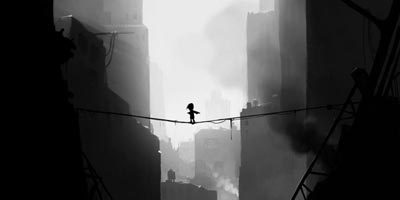 |
| Screenshot from Limbo showing monochromatic black-and-white palette, the use of depth perception in the game, and the concept of the game's puzzles. |
The gameplay is what is referred to as " 2D sidescroller", which means that the play is horizontal and the environment and the character move from left to right across the screen as play continues. But what really is unnerving and interesting is the way that the ambiance and the mechanics of the game tie into the narrative of the story.
"The game is presented in black-and-white tones, using lighting, film grain effects and minimal ambient sounds to create an eerie atmosphere often associated with the horror genre. Journalists praised the dark presentation, describing the work as comparable to film noir and German Expressionism. Based on its aesthetics, reviewers classified Limbo as an example of video games as art." - Limbo Wiki Page
There are no cutscenes, no in game text. There is a very minimalist style to the game, and players are left alone to figure out the systems of puzzles that block your way of reaching the goal. All that is known is that the character in the game is on his way to find his sister.
"Limbo is presented through dark, greyscale graphics and with minimalist ambient sounds, creating an eerie, haunting environment. The dark visuals also hide numerous environmental and physical hazards, such as deadly bear traps on the forest floor, or lethal monsters hiding in the shadows, such as a giant spider. Among the hazards are glowing worms, which attach themselves to the boy's head and force him to travel in only one direction unless bright light comes in contact with it, which changes the direction of the player until it is removed by static NPCs. " - Limbo Wiki Page
 |
| Screenshot from Limbo |
What I found so interesting about Limbo, was the amount of story that I understood with a very limited narrative. There is nothing to guide you through the game, only the vicious and graphic deaths of the character when a puzzle is completed incorrectly, that trigger you to start again in the same location. But I grasped with just the name and the mechanics of the game that the story was supposed to be metaphorical and vague. From the title Limbo, you can already deduce that the main character is probably in the midst of purgatory, but what impressed me the most was that in a puzzle based game, each successive puzzle and section of the story was like traveling through a bleak nightmare, with repetitive tasks and gruesome punishments for not solving the puzzles correctly. Almost like a penance, where the character and the player complete each puzzle not knowing where the game is going to lead, or what the find result will be. If even if the gameplay has any significant meaning. I think this ties in to the idea of purgatory well, and it is not unreasonable with the horrible and eerie effects and tribulations of the game if ideas of hell and the afterlife become images in the player's mind.
There is no record of time passing, no night nor day, only the present where the character himself is not even really a person, but more like a shadow, just barely making it through each level, sometimes having repeated each puzzle countless times until the solution is found. There is no way back, only forward. And at the end of the game, there is nothing that states the game has ended, the character only completes the last level to find himself somehow right back at the beginning where he started. All of these subtle clues in the gameplay and environment, allowed my own mind to fill in the narrative that was actually not ever really stated. Even the game's developers have left the story of the game purposefully empty, so as to neither agree nor disagree with critics and players own interpretations.
Even having watched the gameplay, I still find it hard to describe Limbo. There is something almost poetic about its openendedness that ironically adds so much depth to the game.
9.26.2013
Considering Narrative Scope and Genre in Video Games
Interactive storytelling.
How can we make the stories we tell more engaging? It seems more and more with the emergence and preference of the video game culture, that there is an ongoing evolution in how stories and narrative are digested. In touching back on the Andy Gavin interview in my last blog and some articles that I've read recently, it seems a huge factor in determining a narrative's success relies on really on the game's genre.
Genre, in its most basic definition is just a category that we used to classify certain types of artistic expression that have similar attributes. Take stories for example, it is a scary (horror) story? Is it romance or mystery? When we define genre on its very surface, we can easily see how each of the stories can fit in their specific categories, all of the time. However, in video games, genre is more than that story category, it also has to consider how the game is interacted with by its players. "Narrative considerations in video game creation are relevant for a restricted class of games," blogger Pietro Polsinelli says in his article "Storytelling and Video Games" and the more that I study video games, I realize that there are situations in which a strong narrative might not be the best focus of a particular game. In the article Polsinelli mentions games that are apps on mobile devices often fit into those situations. It could even be said that video games include a non-narrative genre.
However I think that what helps to make a distinction in the genres of video games are their reflective narrative scopes. When I think of narrative scope, which can be somewhat ambiguous, I think of the amount of storytelling and the kind of storytelling that can be described in the genre. Polsinelli introduces an excellent point when he says, "Once one focuses on searching narrative structures in video games, these are found in a wide range of them, sometimes sedimented in character design." He mentions the popular mobile app game Angry Birds and how though the linear narrative in the game is minimal, he fills out the scope by saying that a main storytelling feature in Angry Birds is in the presentation and development of the characters.
I think game design is special in that way because it can pick and choose from the elements within storytelling and concentrate specifically on the elements that they want (such as character development). In typical storytelling, both plot and characters need to be somewhat equally represented, but in games, you can somehow get away with having development characters and minimal plot, but also extensive plot and minimal characterization (such as many platform games). In platofrm games, the characterization doesn't have to be so well developed because the player (especially in a single player game) becomes a character. They are forced to see their own changing and growth. The interactivity allows them to become part of the story, but at the same time it doesn't have to.
This duality I think is what adds to the appeal of the video games is that they are vast and changing and constantly evolving.
How can we make the stories we tell more engaging? It seems more and more with the emergence and preference of the video game culture, that there is an ongoing evolution in how stories and narrative are digested. In touching back on the Andy Gavin interview in my last blog and some articles that I've read recently, it seems a huge factor in determining a narrative's success relies on really on the game's genre.
Genre, in its most basic definition is just a category that we used to classify certain types of artistic expression that have similar attributes. Take stories for example, it is a scary (horror) story? Is it romance or mystery? When we define genre on its very surface, we can easily see how each of the stories can fit in their specific categories, all of the time. However, in video games, genre is more than that story category, it also has to consider how the game is interacted with by its players. "Narrative considerations in video game creation are relevant for a restricted class of games," blogger Pietro Polsinelli says in his article "Storytelling and Video Games" and the more that I study video games, I realize that there are situations in which a strong narrative might not be the best focus of a particular game. In the article Polsinelli mentions games that are apps on mobile devices often fit into those situations. It could even be said that video games include a non-narrative genre.
However I think that what helps to make a distinction in the genres of video games are their reflective narrative scopes. When I think of narrative scope, which can be somewhat ambiguous, I think of the amount of storytelling and the kind of storytelling that can be described in the genre. Polsinelli introduces an excellent point when he says, "Once one focuses on searching narrative structures in video games, these are found in a wide range of them, sometimes sedimented in character design." He mentions the popular mobile app game Angry Birds and how though the linear narrative in the game is minimal, he fills out the scope by saying that a main storytelling feature in Angry Birds is in the presentation and development of the characters.
I think game design is special in that way because it can pick and choose from the elements within storytelling and concentrate specifically on the elements that they want (such as character development). In typical storytelling, both plot and characters need to be somewhat equally represented, but in games, you can somehow get away with having development characters and minimal plot, but also extensive plot and minimal characterization (such as many platform games). In platofrm games, the characterization doesn't have to be so well developed because the player (especially in a single player game) becomes a character. They are forced to see their own changing and growth. The interactivity allows them to become part of the story, but at the same time it doesn't have to.
This duality I think is what adds to the appeal of the video games is that they are vast and changing and constantly evolving.
Naughty Dog's Andy Gavin's Creative Process for Games and Novels
On my Twitter (which I try to use mainly as my author twitter) , I usually follow other authors (which has actually proven to be a wonderful, wonderful thing), so I was presently surprised when I got a follow back from on of the co-founders of Naughty Dog (a gaming company) Andy Gavin. Little did I know that he is an author himself and provided a cool insight as to how storytelling can be such an integral part of video games.
Searching through his feed, I located an article/ interview that he had given to another author and found that it would be relevant in my discussions for Game Design.
In the article, Gavin discusses that the creative processes for writing literature and game design are actually quite similiar, "Video games and novel writing are both very iterative and detail oriented. They use a lot of the same mental muscles," he said. I find this very interesting because as I have started creating games in Game Design, I notice how a narrative seems to come naturally to game creation. Suddenly paper clips become "space junk" and coasters become "landing bases", and to me storytelling within games amps the interaction and helps engagement.
But I think one of the most important topics that Gavin hits upon, is that games and novels are all about ideas and the expression of ideas, "Both games and novels start with a basic idea, and it’s essential to focus on what’s important. In both cases, this is a creative process, imagining something blurry and only partially formed that calls out to you." He uses the example of the creation of Crash Bandicoot, one of the protagonists in Naughty Dog's popular video game series, and his protagonist in his novel The Darkening Dream. In the interview, though Gavin does not explicitly state it, he seems to say there is a distinction between idea development for games and again for stories, but does not outright name the distinction. In Crash Bandicoot, it seems that story creation becomes more like a means to an end. We we want to make a game, we pick out the genre (a platform game with animals) and then we create a story around it. Whereas in novel writing, there seems to be more of an emotional creative process, as in "I have an image in my mind's eye that I want to elaborate more on". I imagine that Gavin is not ignoring the fact that games have mechanics, and there can often be a certain set structure that games have to be constrained to (in general) that maybe can detract from the certain freedom that he notices with writing novels. I can definitely see where gaming for him is definitely more "business/structure" rather than "leisure/creative" as his novel writing.
But I have noticed in my experience with designing our Pick Four Games, that the narrative really does seem like carrying the game to from Point A to Point B, with a set starting point ( we have a, b, c, and we need to come up with d, e, f) rather than I'm going to create a game around an image in my eye and my brain then develops the starting point. It's a slight distinction, and often difficult to express, but explains how storytelling in games has evolved, more outside in, than inside out.
In the article, Gavin discusses that the creative processes for writing literature and game design are actually quite similiar, "Video games and novel writing are both very iterative and detail oriented. They use a lot of the same mental muscles," he said. I find this very interesting because as I have started creating games in Game Design, I notice how a narrative seems to come naturally to game creation. Suddenly paper clips become "space junk" and coasters become "landing bases", and to me storytelling within games amps the interaction and helps engagement.
But I think one of the most important topics that Gavin hits upon, is that games and novels are all about ideas and the expression of ideas, "Both games and novels start with a basic idea, and it’s essential to focus on what’s important. In both cases, this is a creative process, imagining something blurry and only partially formed that calls out to you." He uses the example of the creation of Crash Bandicoot, one of the protagonists in Naughty Dog's popular video game series, and his protagonist in his novel The Darkening Dream. In the interview, though Gavin does not explicitly state it, he seems to say there is a distinction between idea development for games and again for stories, but does not outright name the distinction. In Crash Bandicoot, it seems that story creation becomes more like a means to an end. We we want to make a game, we pick out the genre (a platform game with animals) and then we create a story around it. Whereas in novel writing, there seems to be more of an emotional creative process, as in "I have an image in my mind's eye that I want to elaborate more on". I imagine that Gavin is not ignoring the fact that games have mechanics, and there can often be a certain set structure that games have to be constrained to (in general) that maybe can detract from the certain freedom that he notices with writing novels. I can definitely see where gaming for him is definitely more "business/structure" rather than "leisure/creative" as his novel writing.
But I have noticed in my experience with designing our Pick Four Games, that the narrative really does seem like carrying the game to from Point A to Point B, with a set starting point ( we have a, b, c, and we need to come up with d, e, f) rather than I'm going to create a game around an image in my eye and my brain then develops the starting point. It's a slight distinction, and often difficult to express, but explains how storytelling in games has evolved, more outside in, than inside out.
9.01.2013
Storytelling in Video Games
As an author, I'm already familiar with the art of storytelling. In fact, I think that is the one thing that all authors should strive towards, being a master storyteller. Stories are what add the meat to our lives, they keep us entertained, and keep us wanting more, that is if they're good stories. Some stories though are riddled with plot holes and fallacies, and just like in our own lives , we all can point out the thread that is unravelling the quickest. Well-told or not, storytelling is an integral part of the human experience. It is what allows us to invest our own emotions, form attachments, and actually care about the world around us.
What's the best way to tell a story? What medium seems to carry on this tradition in the most immersive way? For most, it means being an observer. We listen to others as they talk, listen to the radio, or watch television. We read books.
Not to say that these traditional forms of media aren't effective means of storytelling, because they do have their own niches in their own ways into how stories are told, but none of them require much active participation.
However, the expanding art of video games seems to introduce a great potential for the kind of expression that stories inspire. There is a sense of complete immersion, audio/visually, mentally and physically that can be achieved in the act of playing video games. Some view this as a very positive thing, some negative.
In this semester's Game Design class, I plan to explore storytelling as it relates to gaming, and provide examples how games can translate storytelling in many ways that other media may or may not do, while comparing their similarities and the juxtaposition of storytelling within games as opposed to other types of games (i.e fighting, strategy, shooter etc).
These blog posts seek to understand the importance that lies in not what stories are told, but how they are told, and how that affects our reception to them. It will to explore the expectations we have begun to have for games. It will try demonstrate the differences that stories play in all our lives, do we seek stories as a total immersion, as in living vicariously through the scenarios in which we could not hope to experience ourselves? Or do we use stories to deflect the truth? To try and detach ourselves from the moments in our lives that become too much or to serious?
Does the lure lie in like RPGs (role-playing games) such as the massively successful The Sims where you can create you own story? Or in ones like one of my favorites, The Uncharted Series, where you play as a character through a story that's already created for you?
What grounds do stories in video games cover that other forms of media do not? What is limiting, or not limiting about storytelling potential? Is one medium better than the other? What do people prefer?
Do some stories not work in games? Are there sequences that just don't work with the manipulations and conventions of they way video games present information?
These are questions that I want to find answers to this semester. Often, I have thought about the appeal of storytelling in the video game media as opposed to novels, since I myself am a writer. I've considered actually trying to create stories that would constitute a solid basis for a video game, and have often wondered what the transparency is like between both mediums.
What's the best way to tell a story? What medium seems to carry on this tradition in the most immersive way? For most, it means being an observer. We listen to others as they talk, listen to the radio, or watch television. We read books.
 |
| The Sims, by Maxis for the PC. A video game that allows the player to "create" their own "stories" and "characters". |
However, the expanding art of video games seems to introduce a great potential for the kind of expression that stories inspire. There is a sense of complete immersion, audio/visually, mentally and physically that can be achieved in the act of playing video games. Some view this as a very positive thing, some negative.
In this semester's Game Design class, I plan to explore storytelling as it relates to gaming, and provide examples how games can translate storytelling in many ways that other media may or may not do, while comparing their similarities and the juxtaposition of storytelling within games as opposed to other types of games (i.e fighting, strategy, shooter etc).
These blog posts seek to understand the importance that lies in not what stories are told, but how they are told, and how that affects our reception to them. It will to explore the expectations we have begun to have for games. It will try demonstrate the differences that stories play in all our lives, do we seek stories as a total immersion, as in living vicariously through the scenarios in which we could not hope to experience ourselves? Or do we use stories to deflect the truth? To try and detach ourselves from the moments in our lives that become too much or to serious?
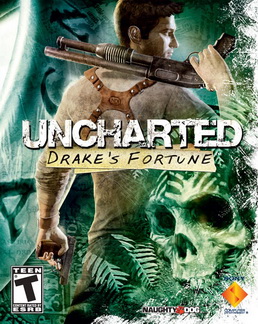 |
| Uncharted, a game series on PS3, that I think provides an excellent example of storytelling. |
What grounds do stories in video games cover that other forms of media do not? What is limiting, or not limiting about storytelling potential? Is one medium better than the other? What do people prefer?
Do some stories not work in games? Are there sequences that just don't work with the manipulations and conventions of they way video games present information?
These are questions that I want to find answers to this semester. Often, I have thought about the appeal of storytelling in the video game media as opposed to novels, since I myself am a writer. I've considered actually trying to create stories that would constitute a solid basis for a video game, and have often wondered what the transparency is like between both mediums.
Subscribe to:
Posts (Atom)